
Appliance Maintenance Checklist 2026 | Stop Costly Breakdowns

A $9 dryer vent brush and twenty minutes of your Saturday stand between you and a much bigger problem. Nationally, dryer-related fires cause an estimated $233 million in direct property damage every year, and most of it traces back to something as unglamorous as lint. That's the gap this appliance maintenance checklist is built to close: not a vague reminder to "take care of your appliances," but a real schedule, organized by how often you should actually do something, backed by numbers instead of good intentions. Along the way, we'll also answer the question competitors tend to skip: when does maintenance stop being worth it, and replacement start making more sense?
Why Preventive Maintenance Actually Pays Off (Not Just a Chore)
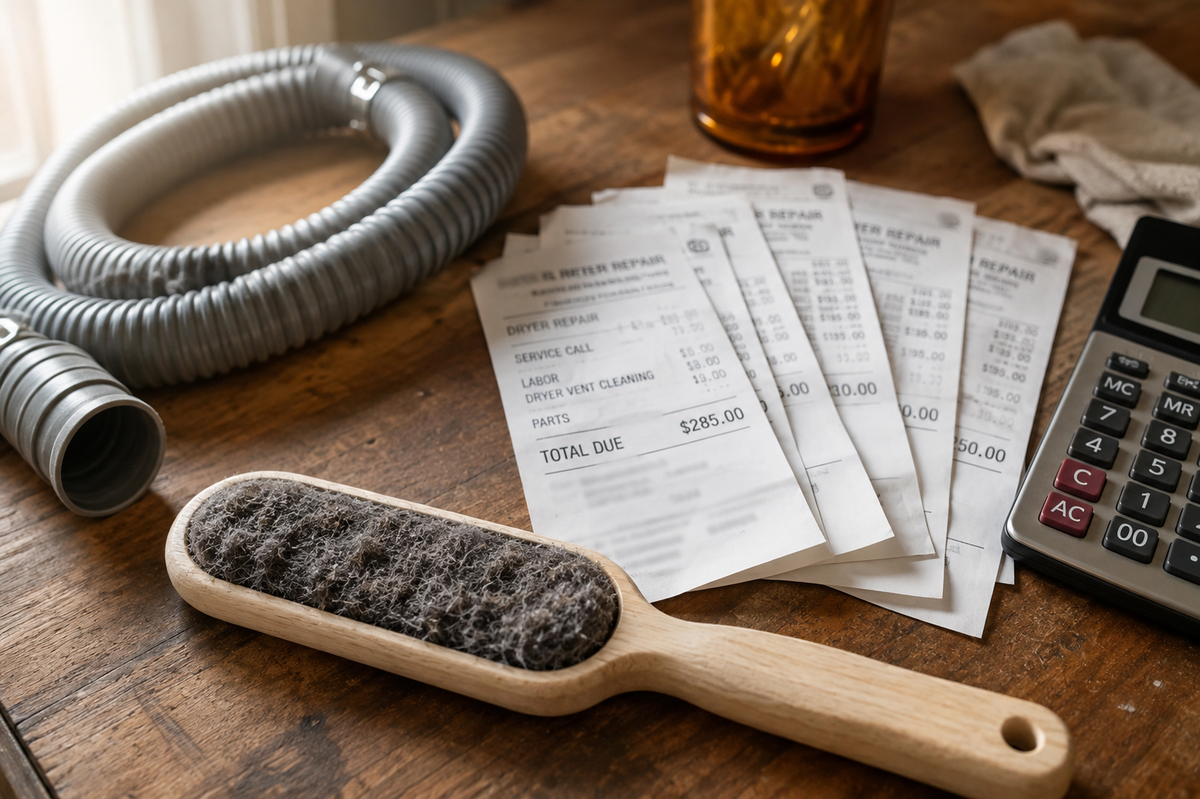
Skipping maintenance doesn't save time. It just moves the cost down the road and makes it bigger.
Refrigerator repairs average $275, with a typical range of $150 to $400. If the compressor goes, you're looking at $700 to $1,250. Dryers are cheaper to fix on average, $100 to $450 depending on the part, but a huge share of those repairs (heating elements, thermal fuses, belts) trace directly back to lint and vent neglect that a homeowner could have prevented.
There's a rule of thumb worth knowing here: the 50% rule. If a repair costs more than roughly half of what a replacement would run, replacement usually wins. It's worth flagging that this is an industry rule of thumb repeated across repair sites, not a peer-reviewed standard, but it's a useful gut check. And maintenance is exactly what keeps most repairs cheap enough to stay on the "fix it" side of that line.
Picture it as a ladder. A $9 vent brush and twenty minutes of your time sits on the bottom rung. Skip it long enough and you're looking at a $180 to $450 heating element repair. Ignore that too, and eventually you're buying a new dryer for $800 to $1,200. Nobody starts at the top rung. They get there by skipping the bottom one.
How Long Should Your Appliances Actually Last? (And Why the "Average" Is Misleading)
Search "refrigerator lifespan" and you'll get answers ranging from 10 to 20 years, which isn't actually helpful. The range exists because different organizations measure different things.
Refrigerators average about 14.3 years of service life according to Department of Energy data, while the Association of Home Appliance Manufacturers estimates 11 to 14 years depending on configuration (side-by-side units tend to wear faster than top-freezer models).
Washers show an even bigger split. AHAM puts front-loaders at roughly 9.1 years and top-loaders at 11.2 years, but DOE modeling estimates washers closer to 13.4 years. The discrepancy isn't a typo. DOE models "mean service life" differently than manufacturers estimate failure rates, so the two numbers are answering slightly different questions.
Dryers land around 13 to 14 years. Dishwashers are the widest range of all, anywhere from 9 to over 15 years depending on whether you're comparing a budget model to a premium one. Water hardness, usage frequency, and build quality all push these numbers around more than any single chart can capture.
| Appliance | AHAM Estimate | DOE Estimate | What Shortens It |
|---|---|---|---|
| Refrigerator | 11–14 years | 14.3 years | Heavy pet hair, dirty coils, hot kitchen location |
| Washer (front-load) | 9.1 years | ~13.4 years | Overloading, mold in door gasket |
| Dryer | 13–14 years | 13–14 years | Clogged lint trap and vent ductwork |
| Dishwasher | 9–15.2 years | Varies by tier | Hard water, skipped filter cleaning |
The Printable Maintenance Checklist (By Frequency, Not By Appliance)
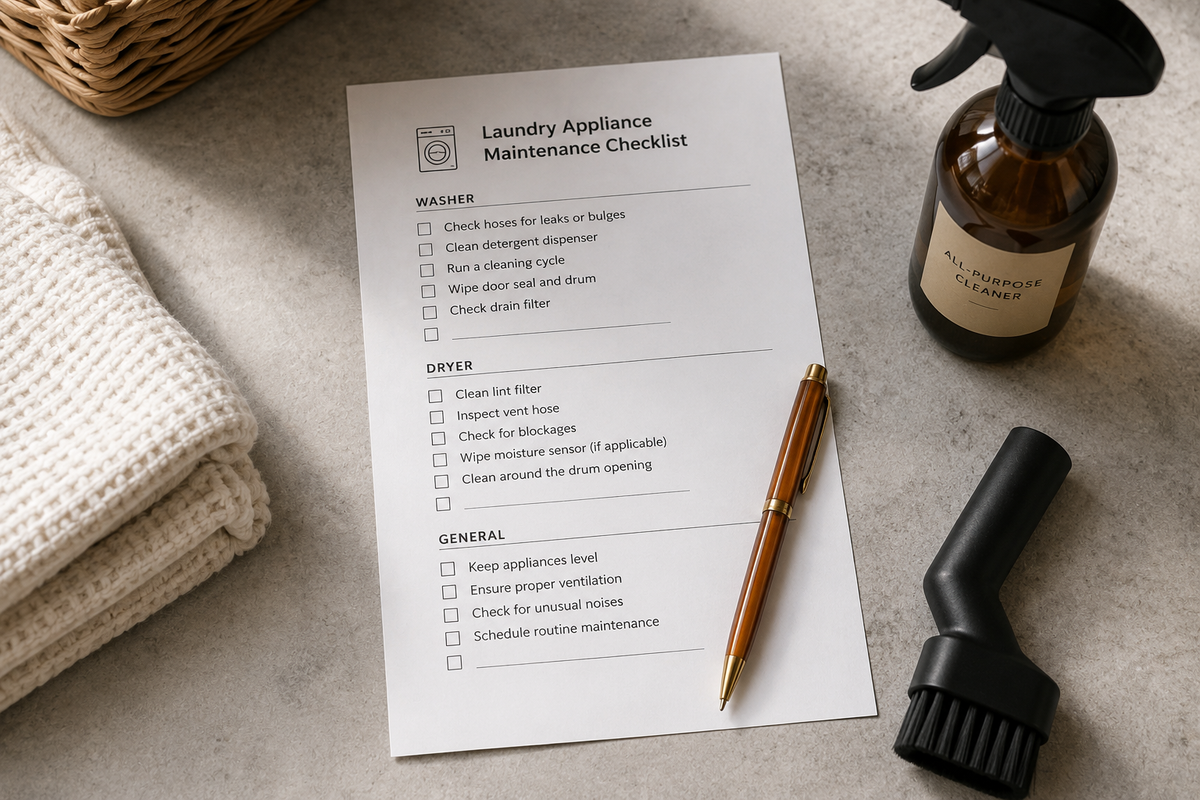
Most checklists are organized by appliance: here's your fridge list, here's your washer list. That's not how people actually plan their week. This one is organized by how often you'll realistically do it.
Weekly / After Every Use
- Clean the dryer lint trap after every single load, not "regularly." Lint was the leading first-ignited item in dryer fires, showing up in 27% of incidents.
- Wipe the dishwasher door gasket and check for trapped food debris to prevent odor and seal wear.
Here's something vent-cleaning technicians see constantly: skip lint cleaning for just two or three loads and airflow measurably drops. If your clothes are suddenly taking 45 minutes or more to dry, that's not a coincidence. That's the lint talking.
Monthly
- Vacuum refrigerator condenser coils if you have pets shedding heavy hair or live somewhere dusty.
- Run an empty hot-water cycle with dishwasher cleaner or vinegar to clear grease from the spray arms.
- Check the front-load washer door gasket for mold; wipe it dry and leave the door cracked between loads.
A washer that's overdue for maintenance often starts throwing warning signs before it fully breaks down. If yours starts flashing an error code mid-cycle, it's worth reading up on what it means rather than guessing; see this guide on what triggers an E1 error on a washing machine for a common example.
Quarterly
- Clean the dryer vent duct itself, not just the trap. Pull the exterior vent cover and check for packed lint. Straight, accessible ducts are DIY-safe; long runs or ductwork inside walls, call a pro.
- Deep-clean the dishwasher filter. Even "self-cleaning" filters on modern units usually need a manual rinse. A clogged filter is also one of the most common reasons a dishwasher stops draining properly; if you're already dealing with standing water, this full guide to a dishwasher not draining walks through the likely causes before you call anyone.
- Inspect washer supply hoses for bulging, cracking, or leaks. Replace at the first sign of wear, not after you've mopped up a flood.
Twice a Year
- Fully vacuum refrigerator coils, more often with pets. Replace water dispenser and ice-maker filters. Both recommendations come from appliance longevity guidance published by AARP.
- Flush the water heater to clear sediment buildup, which improves efficiency and protects the tank and heating element.
Here's the part almost nobody mentions: neglected sediment in a water heater isn't just an efficiency problem. Stagnant water and sediment, especially at lower thermostat settings, can encourage the growth of Legionella bacteria. That's a health issue hiding inside what looks like a purely mechanical chore.
Annually
- Schedule professional dryer vent cleaning, especially for long or wall-routed ducts. Failure to clean is the single leading factor behind dryer fires.
- Have a technician inspect refrigerator door seals, the defrost drain, and (on older units) refrigerant lines. Sealed-system work isn't a DIY project. A refrigerator that's starting to fail often gets noisy before it fully quits; if yours has picked up a new hum or rattle, this breakdown of why a refrigerator makes a buzzing noise can help you figure out whether it's a fan, a compressor, or something more routine.
- Check the garbage disposal for leaks, odd noises, and dull blades.
DIY-Safe Tasks vs. When to Call a Professional
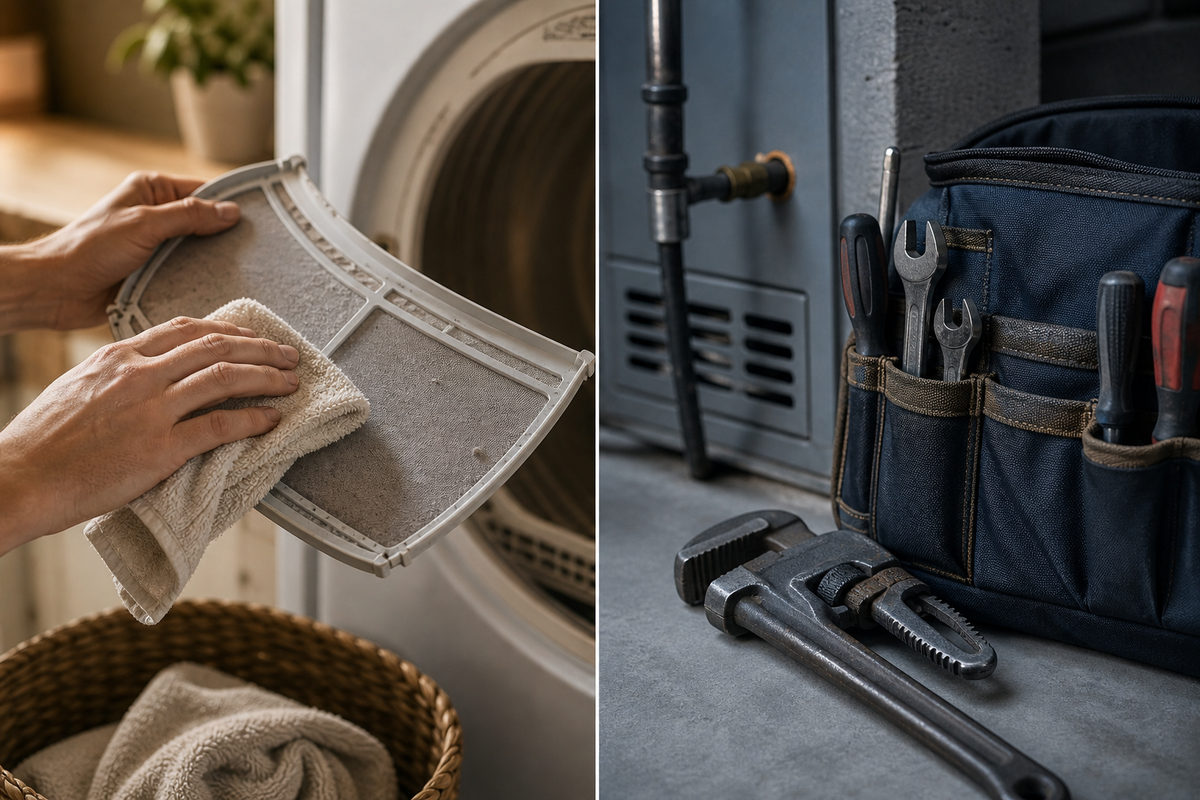
Most articles treat every task on a maintenance list as equally doable. It's not, and pretending otherwise is how people get hurt or void a warranty.
DIY-safe territory covers lint trap cleaning, coil vacuuming, visual hose inspection, filter replacement, and cleaning the exterior vent cover on short, accessible runs.
Call a licensed pro for anything touching refrigerant. This isn't just a safety suggestion; the EPA's Section 608 rules actually regulate refrigerant handling, so DIY recharging is a federal issue, not just a bad idea. The same goes for gas line connections, igniter replacement on gas appliances, water heater element replacement, and anything involving your electrical panel.
Real scenario: you catch a whiff of gas near the dryer connection. Do you poke around and check for a loose fitting yourself? No. Stop what you're doing, ventilate the area, and call your gas utility or a licensed technician immediately. That's not a maintenance task. That's an emergency.
Repair or Replace? A Simple Decision Framework
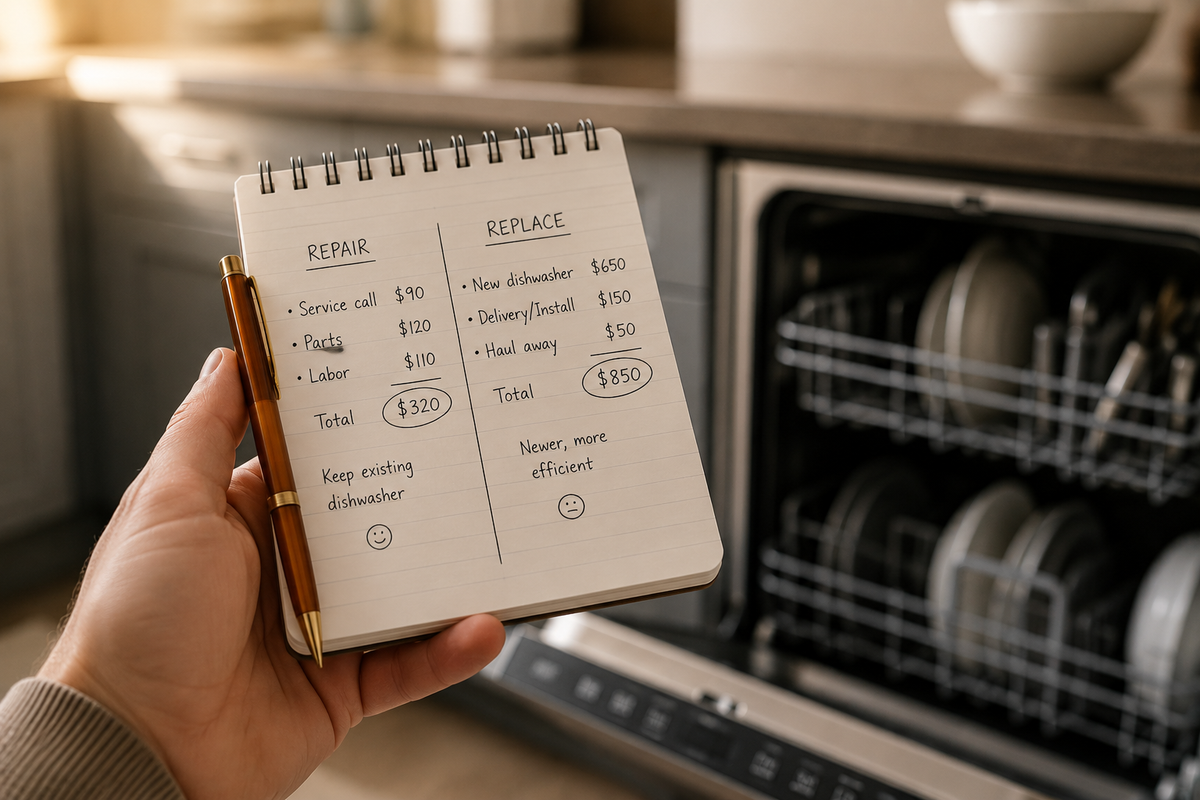
The 50% rule is a good start, but it's not the whole picture. A useful decision combines three things: the repair cost against roughly half of replacement cost, the appliance's age relative to its typical lifespan, and how often it's been breaking down lately. A second failure within twelve months is a stronger signal to replace than raw age alone.
Let's actually run the numbers instead of talking about them abstractly. Say you've got a 9-year-old dishwasher, sitting right in the middle of its 9-to-12-year expected lifespan, and the pump just failed. Repair estimate: $220. A comparable new unit runs about $650. Is $220 above 50% of $650 (which is $325)? No, it's well under. Combine that with an appliance that's not yet past its expected lifespan, and repair is the clear call here.
Now flip it for dryers specifically. If a dryer has a mechanical fault and you're seeing signs of vent restriction (slow drying, a burning smell, excessive heat in the room), that's a stronger case for replacing now rather than repairing, and not just because of cost. That's the fire-risk data from earlier reasserting itself in a practical decision.
Common Mistakes That Undo Good Maintenance Habits
Even people who mean well trip themselves up in predictable ways.
Overloading the washer to squeeze in "one more load" wears out bearings and seals faster than the water and energy you'd save actually justifies, according to Family Handyman's appliance lifespan research. Using dryer sheets on every single load leaves a waxy residue on the lint screen that can dull sensor accuracy over time, per the same source. Piling on extra detergent "for a better clean" doesn't clean better. It degrades gaskets and seals and can etch glassware.
And here's one that seems responsible but isn't: turning the water heater thermostat way down to save energy. Drop it below roughly 120°F and you increase the risk of Legionella growth, per New Jersey Department of Health guidance. Efficiency matters, but not at the cost of that trade-off.
Note: EPA Section 608 refrigerant regulations are referenced per the outline's flag for direct verification at epa.gov before publishing. DOE 2023–2024 rulemaking figures should be checked against the exact rulemaking document before publishing.