E1 Error on Washing Machine | What It Means and How to Fix It by Brand

The cycle stops. The display flashes E1. And your load is sitting there half-soaked in cold water, going nowhere.
Here's the thing most articles won't tell you upfront: E1 error washing machine codes aren't one problem with five generic fixes. It's shorthand that different manufacturers use for different failures, and the fix for your LG has almost nothing to do with the fix for your Whirlpool. Before you start pulling hoses off the wall, figure out which E1 you're actually dealing with. That's what this guide does first, then walks you through the actual repair.
What Does E1 Actually Mean? (It Depends on Your Brand)
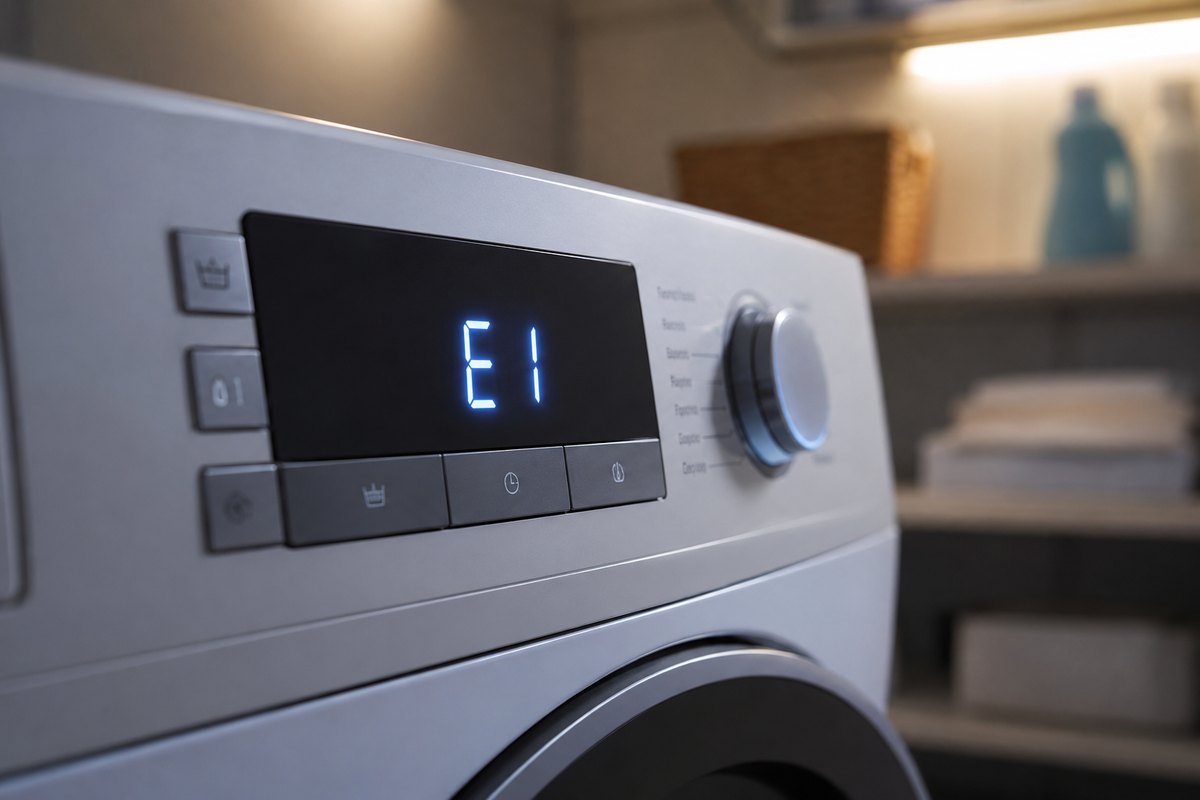
This is the part most troubleshooting sites gloss over in a single generic sentence. It shouldn't be an afterthought. It's the reason DIY fixes fail half the time, people apply a Samsung solution to a Whirlpool problem and wonder why the error keeps coming back.
LG Washers
On LG machines, E1 generally points to the control system picking up a sensor or circuit reading outside its normal range, most often tied to how the machine senses fill level. According to troubleshooting guidance referencing LG's error system, this is a fill-sensing issue rather than a single component failure. Worth noting: that source is third-party, so if you own an LG, cross-check your exact model against LG's own support documentation before you buy parts.
Samsung Washers
Samsung is more direct about it. Per Samsung's official support page, E1 signals a water supply or fill detection failure. Their guidance is specific: check the water supply and pressure, inspect hoses for kinks, check the inlet filters, and check the wiring running to the inlet valve. That's a real checklist, not a guess.
Whirlpool and Maytag: the "F_E1" Family
Whirlpool almost never shows a bare "E1" on its own. It pairs the code with an F-number, and each pairing means something completely different:
- F1E1 means the main control board detected a failure. The first step is unplugging the machine for five minutes to force a reset, per Whirlpool's official F1E1 page.
- F3E1 means the washer can't detect the water level correctly, usually a control unit or wiring issue. Source: Whirlpool F3E1.
- F8E1 means incoming water flow wasn't detected. The door may lock and the controls can go unresponsive during an 8 to 10 minute auto-drain cycle. Source: Whirlpool F8E1.
- F9E1 means a drain failure, frequently caused by the drain hose being pushed too far into the standpipe. Whirlpool specifies a maximum insertion depth of 4.5 inches (113mm). Source: Whirlpool F9E1.
If you own a Whirlpool or Maytag and only see "E1" with no F-number attached, look again. There's almost always a companion code, and it changes everything about the fix.
GE Washers
On GE machines, E1 generally indicates a fill problem, the washer isn't reaching the correct water level within the time it expects. There's guidance floating around referencing a minimum water pressure requirement, but that figure comes from a third-party aggregator rather than GE's own appliances.com support page. If you own a GE, verify the exact PSI threshold on GE's official site before treating any specific number as gospel. That verification gap is worth flagging rather than papering over with a made-up figure.
Quick Diagnostic: Answer 3 Questions Before You Touch Anything
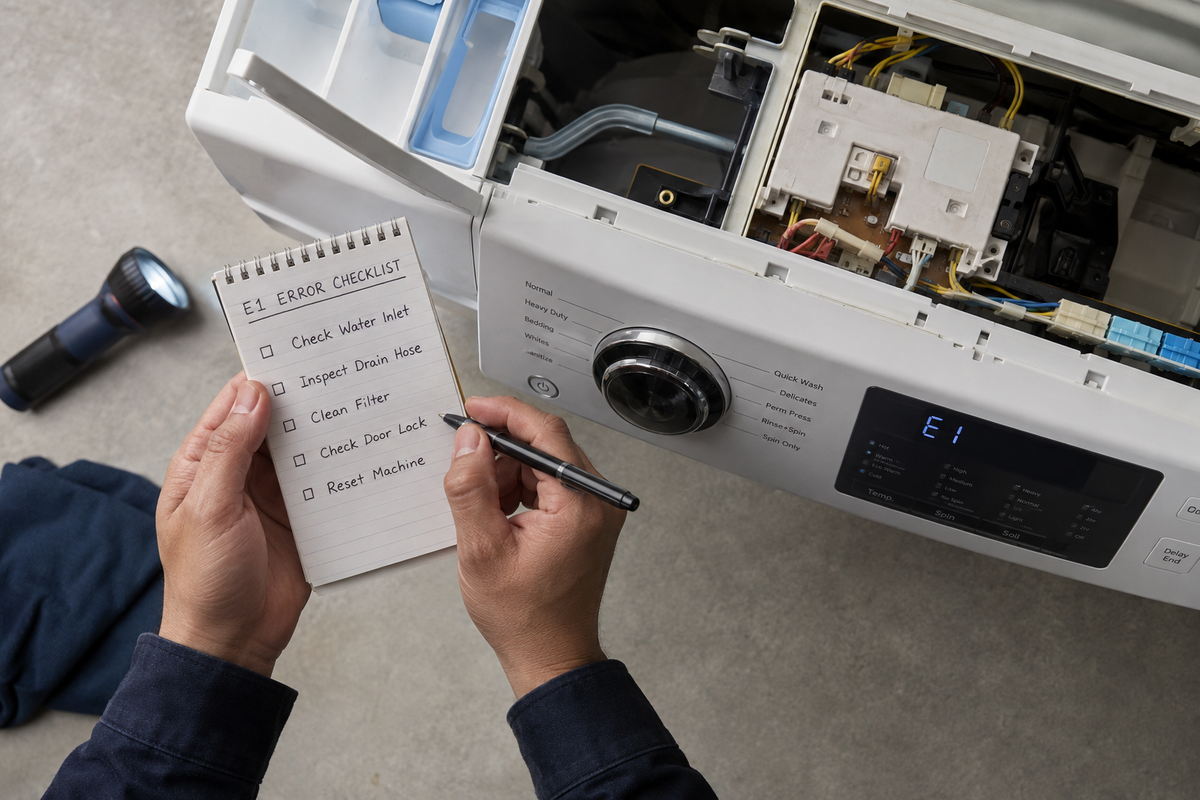
Don't start swapping parts. Answer these first, the way a technician actually would on a service call:
- Does the machine fill with water at all, or does it fill partway and stop?
- Does the error appear immediately on start, or only after several minutes?
- Is the door locked and unresponsive, or can you still open it?
A no-fill or partial-fill answer points you toward the water supply section below. A delayed error with a locked door leans toward drain or auto-drain behavior. An immediate error on start, especially paired with an F1 prefix, points toward the control board, which is a different animal entirely.
Fix #1: Water Supply and Fill Problems (Most Common Cause)
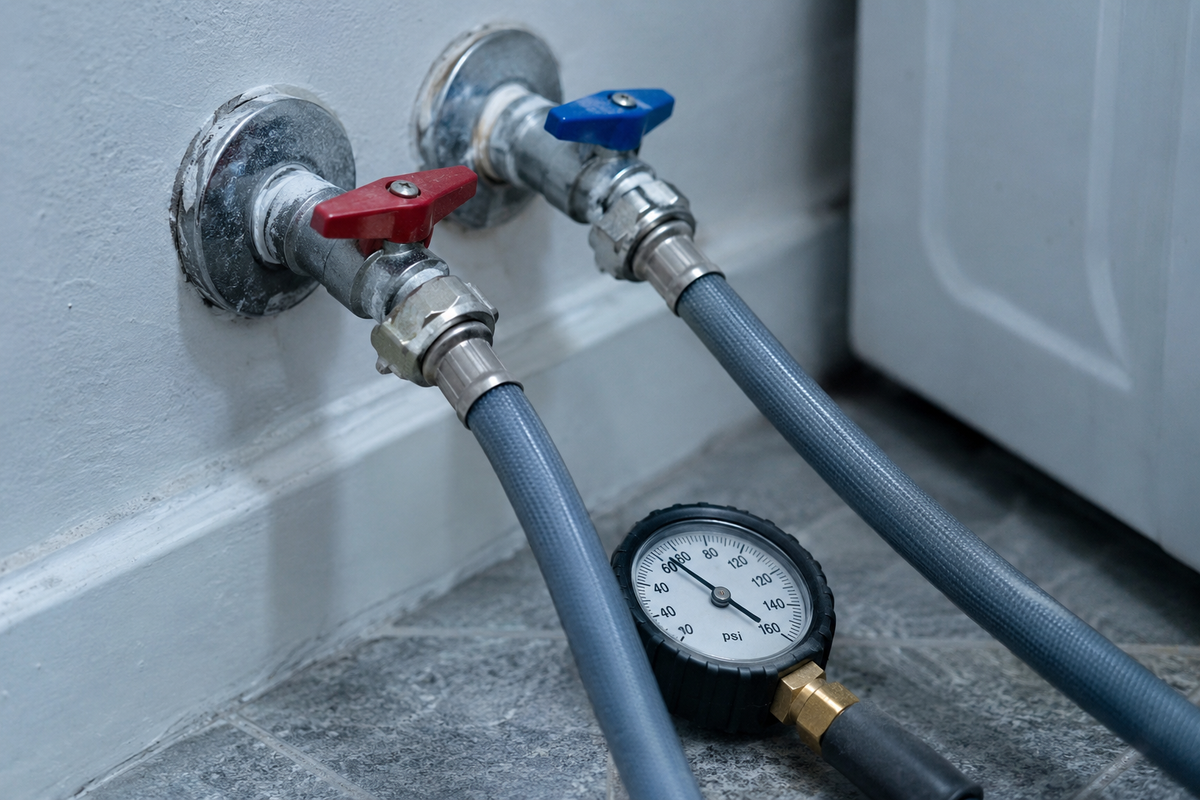
This is where most E1 errors actually live. Work through it in order.
Confirm both the hot and cold valves behind the machine are fully open. Some machines require both lines connected and open even when you're only running cold cycles, a detail Beacon Services & Appliances calls out specifically and a lot of guides skip entirely.
Check the inlet hoses for kinks or crush points, especially if the machine was recently moved or pushed back against a wall.
Clean the inlet screens. Turn off the water, remove the hoses with pliers, and brush the small mesh screens with mild soap and water. An old toothbrush works fine for this. Whirlpool's own F8E1 support page walks through this exact step.
A partially clogged screen usually shows a visible ring of mineral buildup around the mesh, still passing some water but restricting flow. A fully clogged screen looks solid, almost like it's been painted over. Knowing the difference matters: a partial clog might just need a cycle or two after cleaning to clear itself, while a fully blocked screen won't improve until you physically remove the buildup.
You can also test your home's water pressure directly at an outdoor spigot using a basic gauge, the kind that costs about $10 at a hardware store. If your pressure reads low, that's often the real root cause behind repeat E1 errors, not the washer itself.
Fix #2: Drain-Related E1/F9E1 Errors
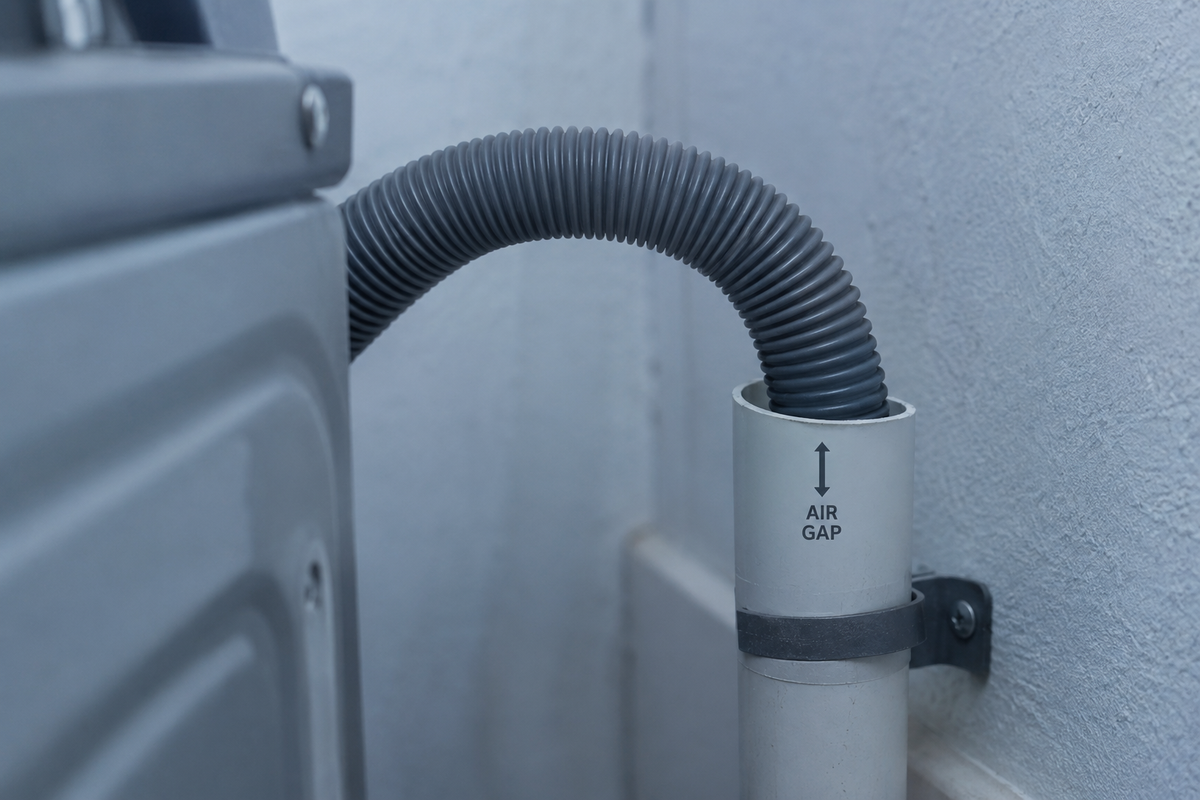
If your diagnostic pointed toward drainage rather than fill:
- The drain hose shouldn't extend more than 4.5 inches into the standpipe. Follow the U-shape form shown in your install manual, per Whirlpool's F9E1 guidance.
- The standpipe itself needs to sit at least 39 inches (99cm) off the floor. Lower than that, and gravity can siphon water back into the machine, according to Whirlpool's F8E1 page.
- Never tape or seal the drain hose into the pipe. It needs an air gap to work correctly.
- On front-loaders, check the drain pump filter for coins, buttons, or stray socks. It's more common than you'd think.
Fix #3: Testing the Water Level Sensor / Pressure Switch (For Persistent Errors)
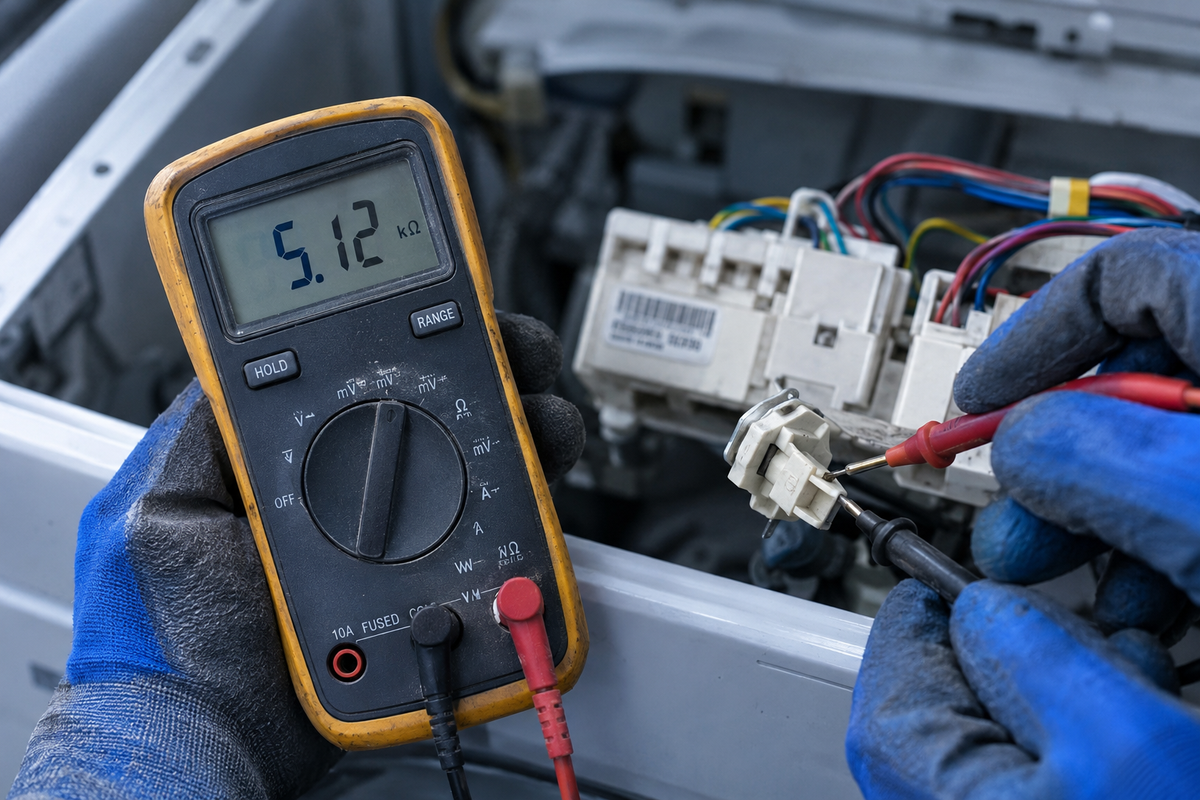
If you've cleared the hoses and screens and E1 keeps returning, the pressure sensor or switch itself may have failed. This requires unplugging the machine and accessing the control panel to locate the sensor, then running a continuity test with a multimeter.
Be honest with yourself about this step. It requires a legitimate technical reference for the correct readings on your specific model, not a guess based on what "should" read continuity. If you don't have that reference in hand, this is the point where calling a technician saves you more time than it costs.
One clear rule: control board diagnostics, especially anything tied to an F1E1 code, generally shouldn't be a DIY project. That's component-level board testing, and getting it wrong can turn a repairable board into a dead one.
When to Stop DIYing and Call a Technician
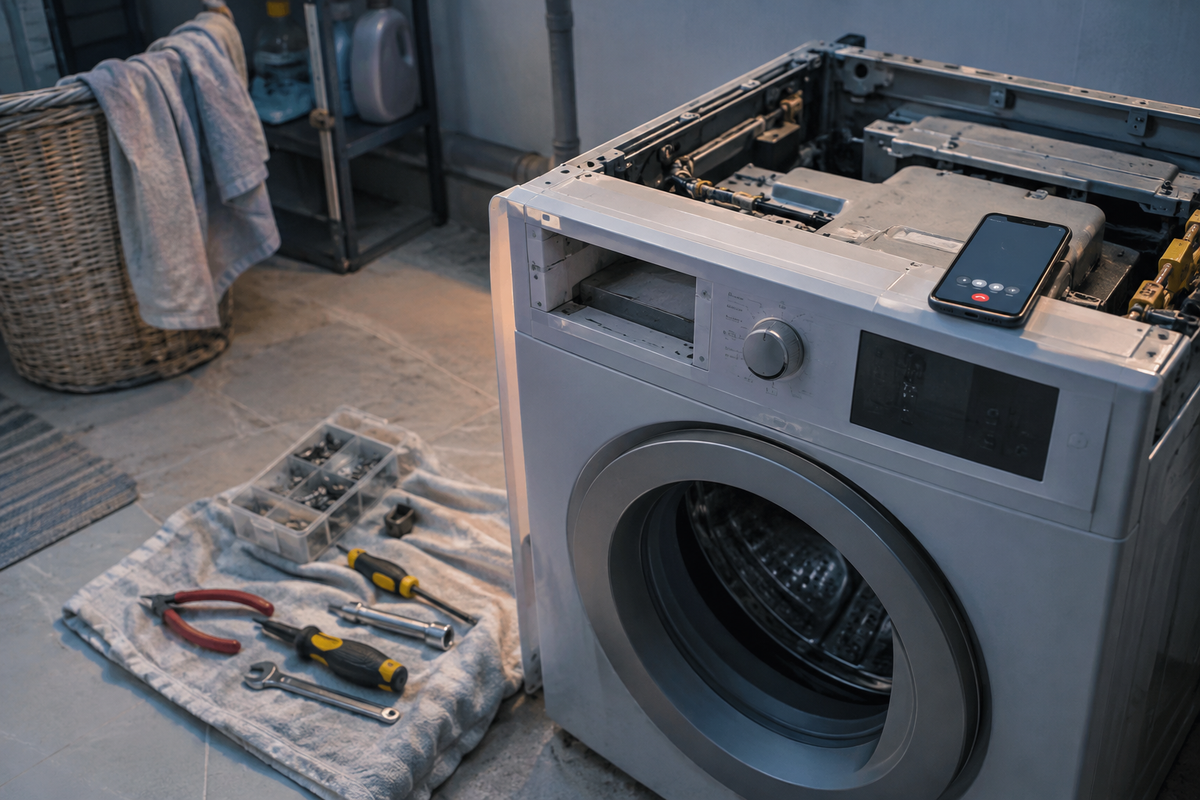
If you've cleared the hoses, cleaned the screens, confirmed your water pressure, and E1 still shows up within a single cycle, the sensor or valve itself has likely failed. That's not a cleaning problem anymore.
Repair costs vary a lot depending on what's actually broken, an inlet valve replacement, a control board swap, and a drain pump repair are three very different jobs in terms of both parts cost and labor. Rather than throw out a number that might be wrong for your specific machine and region, check current pricing through a parts marketplace or a repair cost guide before deciding whether DIY still makes financial sense.
Here's a real example of how the diagnostic logic plays out. A top-load Whirlpool displayed F8E1, but only during cold-water cycles, never during hot. That single detail ruled out the main pressure sensor immediately and pointed straight at the cold-side inlet valve. Without that kind of pattern recognition, it's easy to spend an afternoon testing the wrong component.
How to Prevent E1 From Coming Back
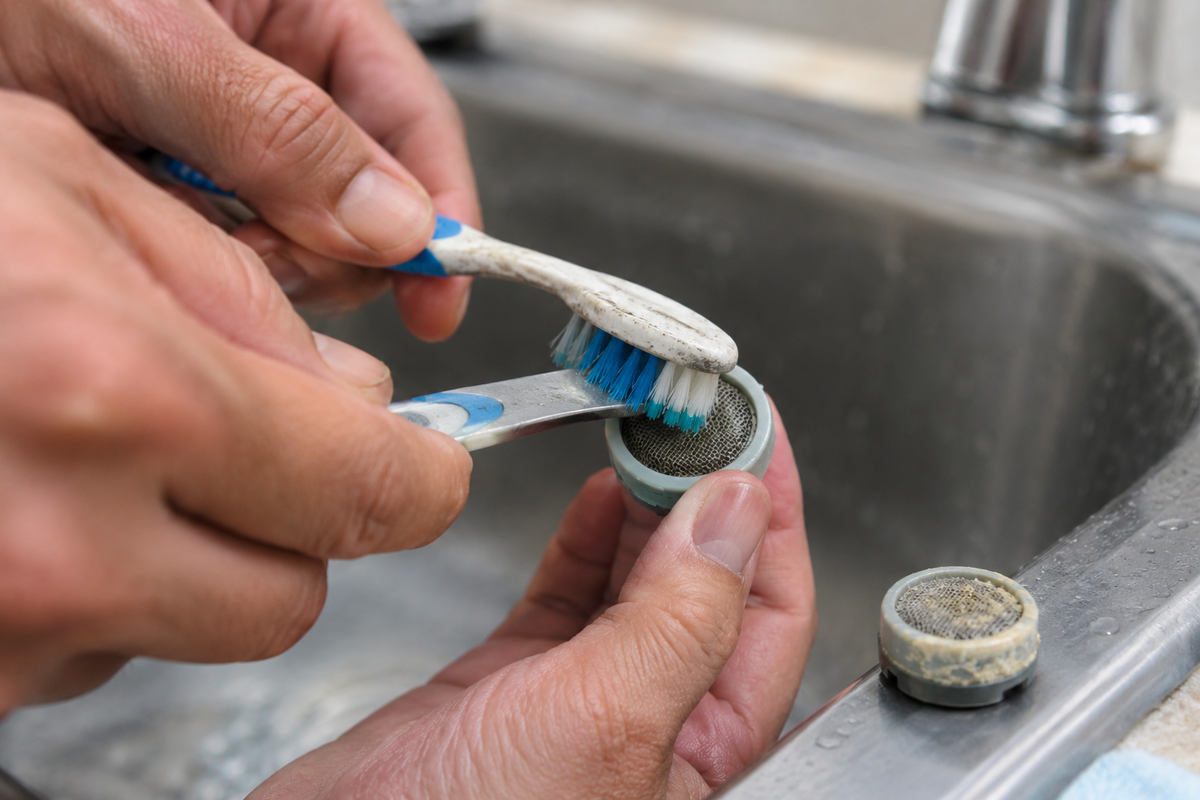
Clean your inlet screens roughly every six months, more often if you're in a hard-water area where mineral buildup happens faster.
Skip anti-flood or flood-safe devices on your supply line if you can avoid them. They reduce water pressure enough in some setups to trigger false fill errors, according to Whirlpool's F8E1 page.
And don't overload on detergent. Excess suds can confuse fill sensors, particularly on HE machines, per Beacon Services & Appliances.
(internal link: How to Test a Washing Machine Water Inlet Valve) (internal link: Washing Machine Won't Drain: Full Troubleshooting Guide) (internal link: Common Whirlpool Washer Error Codes, Full List) (internal link: How to Check Your Home's Water Pressure) (internal link: When to Repair vs. Replace a Washing Machine)