Commercial Refrigerator Not Holding Temp? Full Fix Guide

A reach-in dial reads 38°F. The food probe inside says 46°F. That eight-degree gap is the whole problem in miniature: the thermostat display and the actual temperature of your food are two different things, and treating them as the same is how a lot of kitchens end up with spoiled inventory they didn't see coming.
If your commercial refrigerator not holding temperature is the reason you're here, this guide is organized around a question competitors rarely ask: what's the pattern? A unit that's dead is a different problem than one that drifts warm over three days, which is different again from one that spikes for twenty minutes every afternoon. Diagnose by pattern and you fix the right thing the first time.
Why "Not Holding Temperature" Isn't One Problem, It's Four
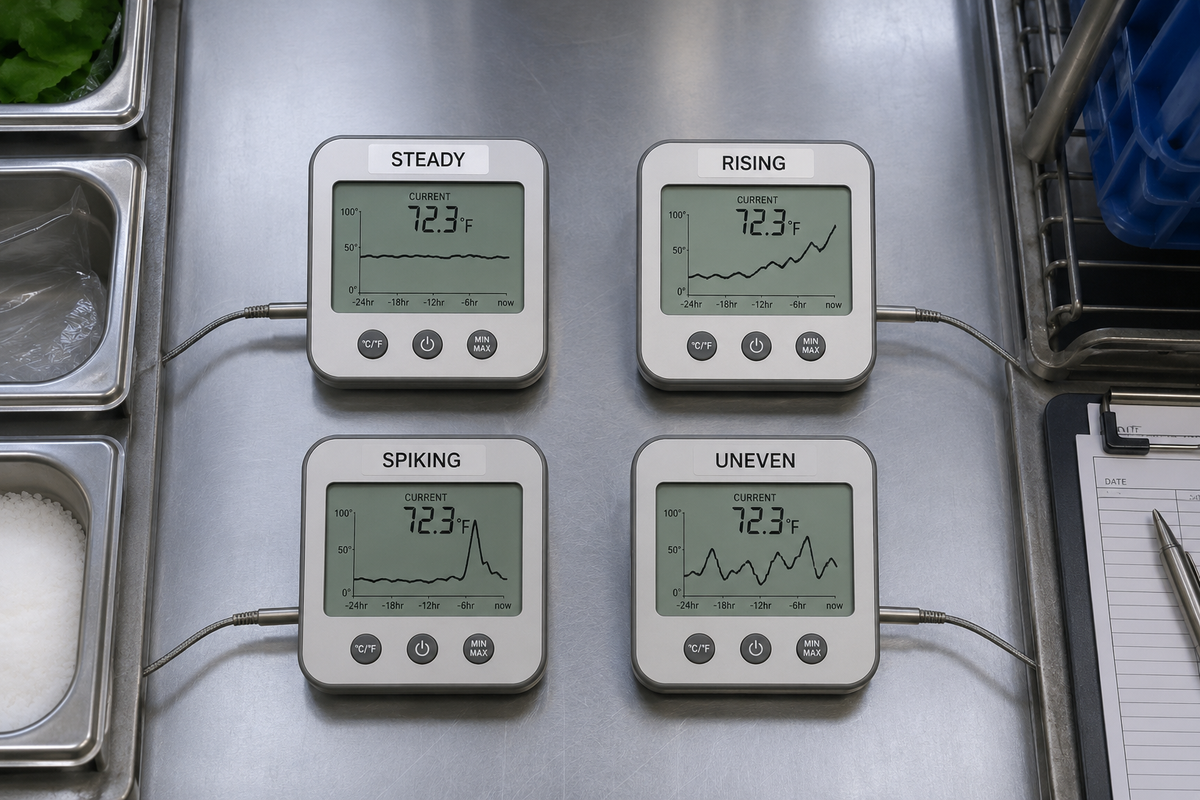
Most troubleshooting content treats every symptom the same way: dirty coils, bad gasket, check the thermostat, repeat. But "not holding temperature" almost always falls into one of four distinct patterns, and each has its own likely causes:
- Total failure, no cooling at all
- Gradual drift, temperature creeps up over hours or days
- Intermittent spikes, fine most of the time, then jumps
- Localized failure, one zone or one unit is off while everything else runs fine
Figure out which one you're dealing with before you touch anything. It'll save you from cleaning coils on a unit whose actual problem is a stuck defrost timer.
First, Confirm It's Actually a Temperature Problem (Not a Thermometer Problem)
Built-in dial thermostats are unreliable in real kitchen conditions. Grease film coats the sensor, door-mounted units read ambient air more than core temperature, and a lot of "the fridge is broken" calls turn out to be "the dial is lying."
How to Verify with a Calibrated Thermometer
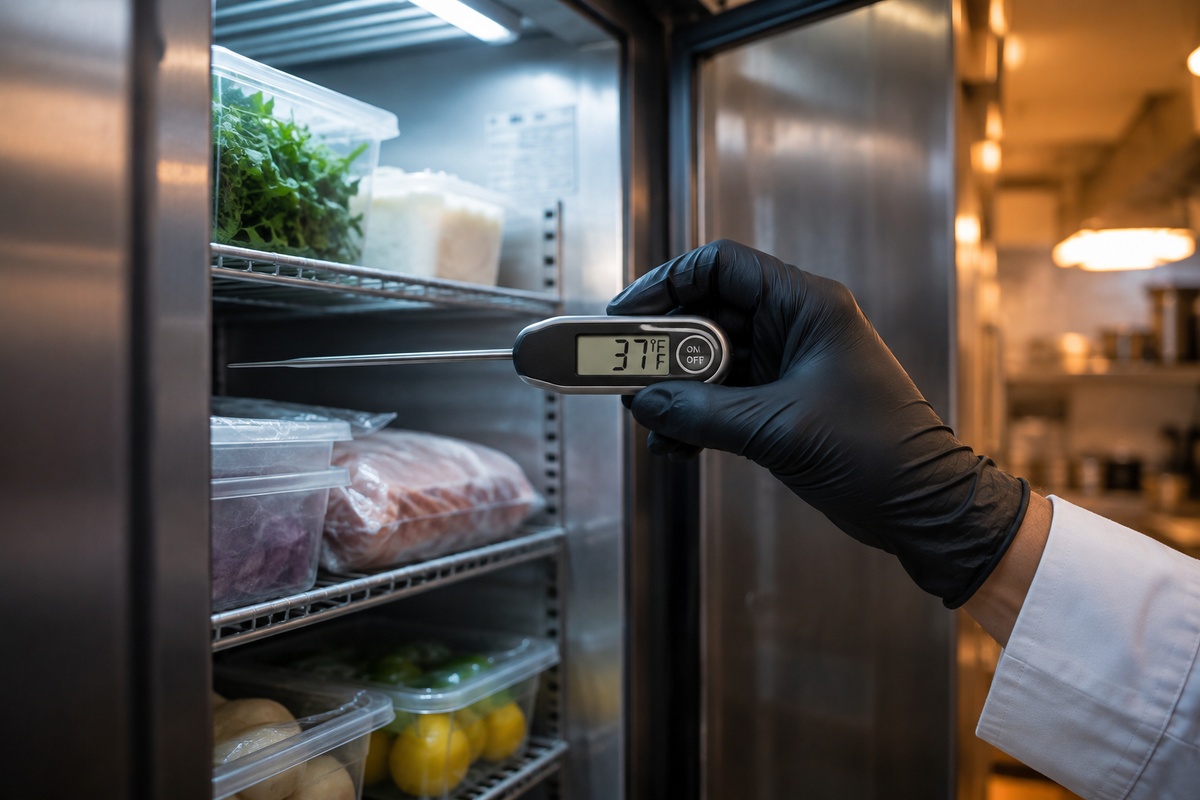
Place a probe thermometer (or a glass of water with a thermometer in it) in the center of the unit, away from the fan discharge and the door. Let the door stay closed for 5 to 8 minutes before you read it. That's your real number, not the dial's.
What "Normal" Actually Looks Like
The FDA Food Code requires cold TCS (time/temperature control for safety) food to hold at 41°F or below. Most operators set the thermostat to 35 to 38°F, which builds in a buffer for door-opening recovery and defrost cycles. If your unit reads 41°F right at the target with no buffer, one busy lunch rush can push it into unsafe territory.
Pattern 1: Total Failure (Unit Isn't Cooling at All)
Check the cheap, fast stuff first.
Power and Electrical Checks
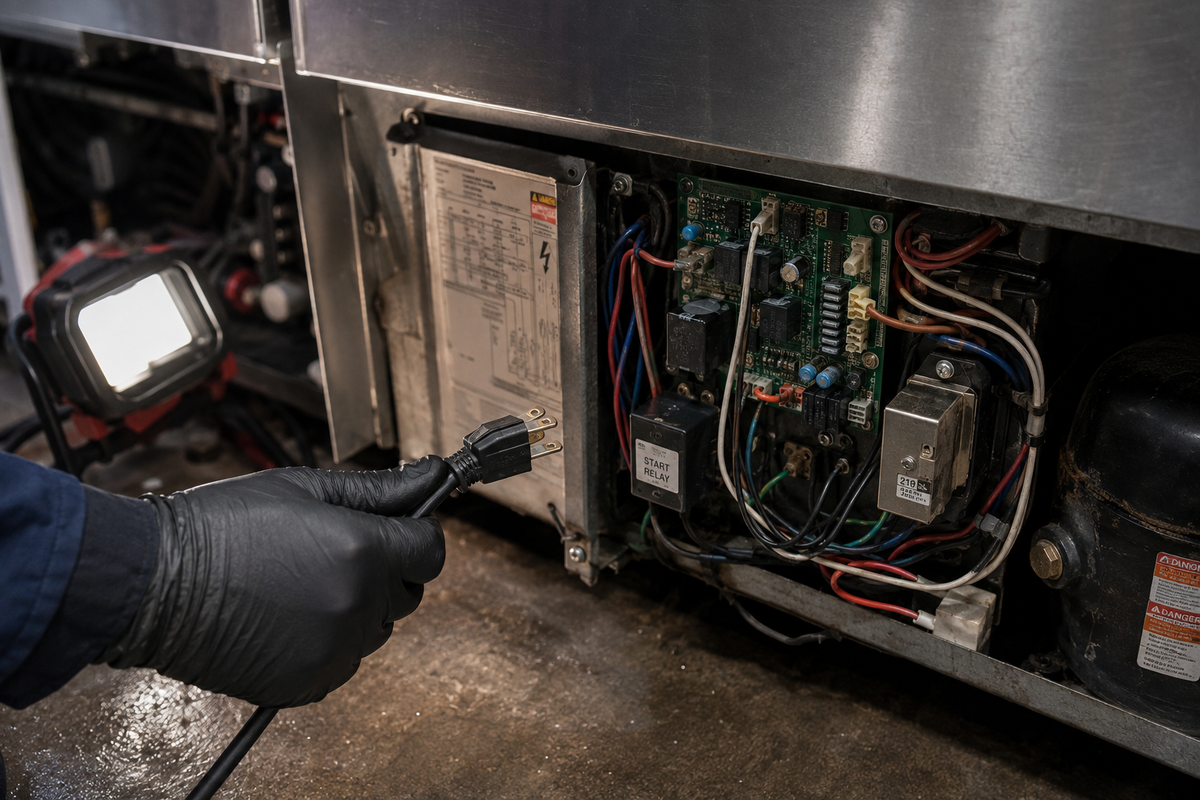
Confirm it's plugged into a working, dedicated outlet. Check the breaker. If the unit has a digital control board, unplug it for 30 to 60 seconds and plug it back in. That hard reset clears a surprising number of "frozen" boards, and it costs you nothing but a minute.
Compressor Not Running or Not Starting
A compressor that hums but won't actually start is usually a start relay or start capacitor issue, not a dead compressor. It's a specific, fixable part, and it's worth knowing the difference before you assume the whole unit is toast.
When This Is an EPA-Regulated Repair
Here's the part almost nobody says plainly: any repair that opens the refrigerant circuit (adding or removing refrigerant, swapping a compressor, disconnecting hoses) legally requires a technician certified under EPA Section 608. This isn't a suggestion. It's federal law under the Clean Air Act, and the EPA is explicit about which repairs violate the integrity of the refrigerant circuit. If a repair company won't tell you upfront whether your fix needs that certification, that's worth noticing.
Pattern 2: Gradual Temperature Drift (Creeping Up Over Hours or Days)
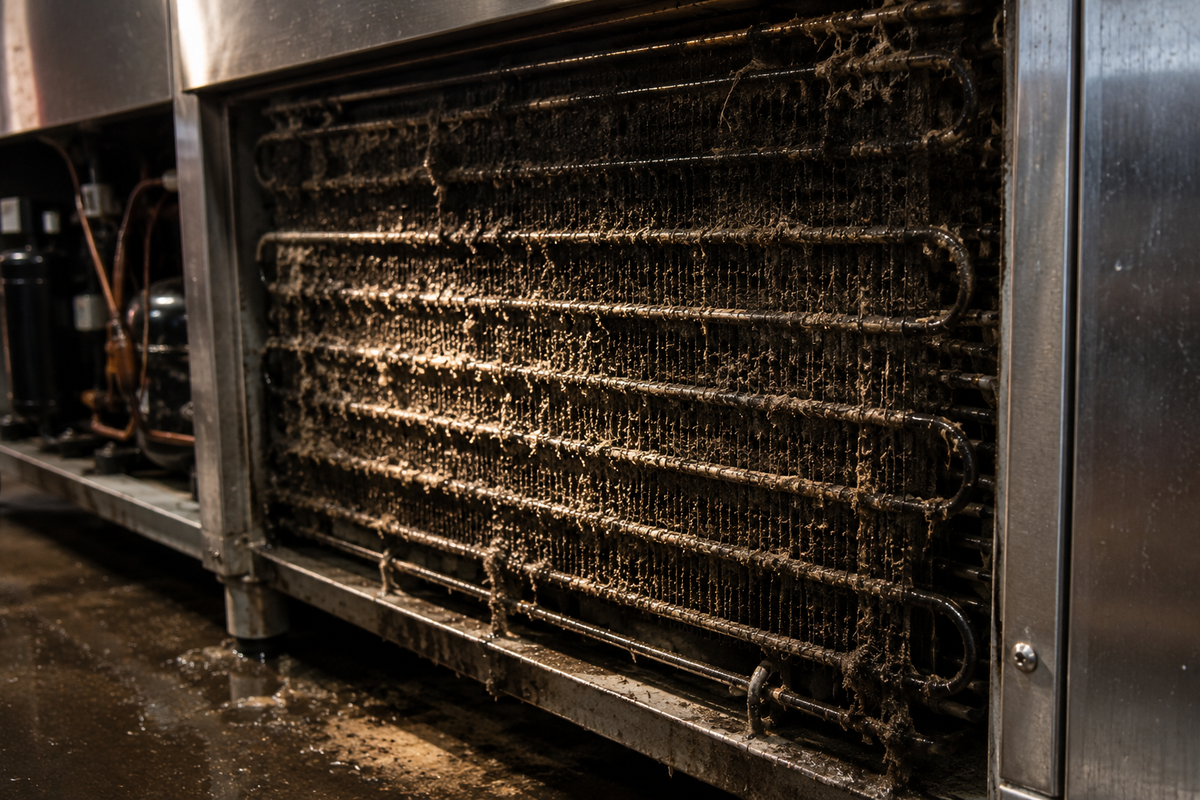
This pattern is really a story about heat rejection failing, one system at a time.
Condenser Coils Are Dirty or Blocked
Near a fryer line, grease-laden air can coat coils within weeks. Clean monthly in greasy kitchens, quarterly in cleaner environments. "Clean regularly" isn't a schedule; that is.
Door Gaskets Are Torn, Warped, or Not Sealing
Run the dollar-bill test. Close the door on a bill at several points around the frame. If it slides out with little resistance, the seal's compromised and warm air is getting in every time that door shuts.
Poor Airflow Clearance Around the Unit
Condensing units need room to breathe, generally a few inches of clearance minimum, more for back-mounted condensers (check your specific installation manual, since this varies by brand and model). A unit crammed against a wall works harder for less result.
Refrigerant Undercharge (Slow Leak)
A slow leak produces exactly this gradual-drift pattern, which is what separates it from the sudden causes above. Watch for frost patterns on the evaporator or oily residue at fittings. You can spot the signs yourself; the fix still needs an EPA-certified tech.
Pattern 3: Intermittent Spikes (Fine, Then Suddenly Warm, Then Fine Again)
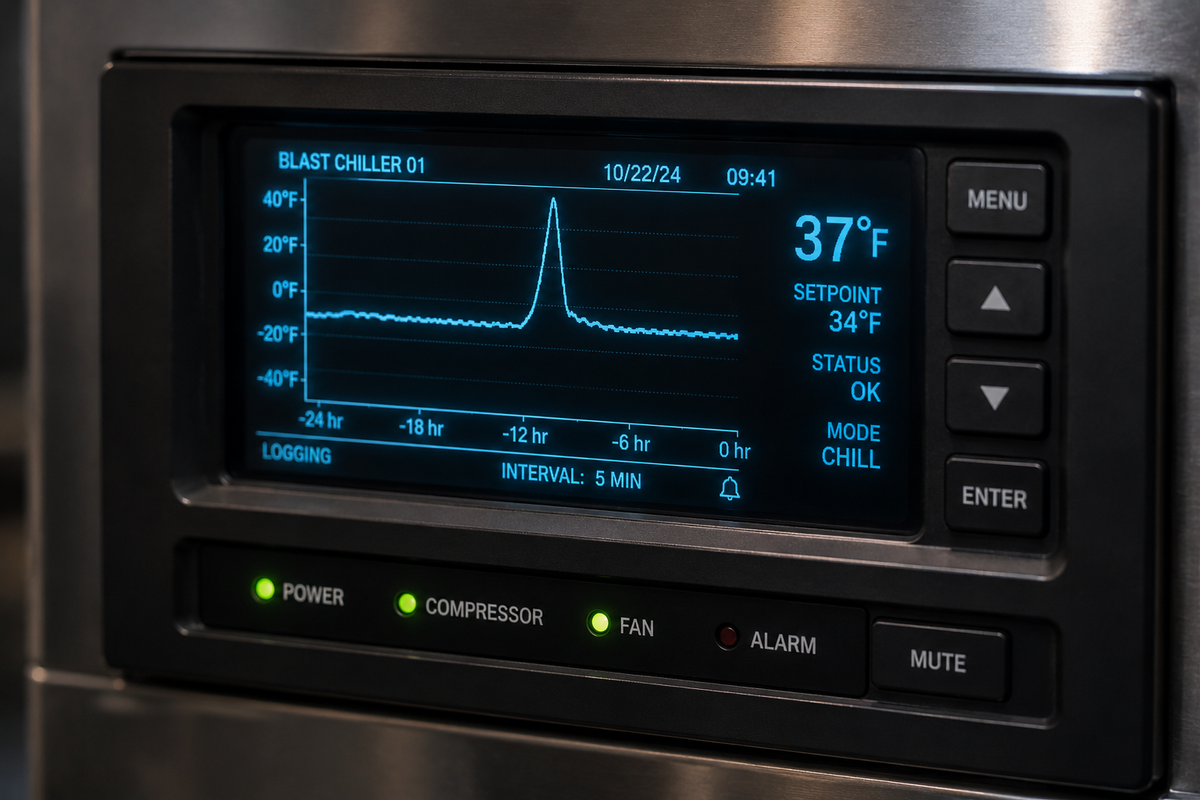
This is the pattern most troubleshooting guides skip entirely, and it's often the most confusing to live with because the unit "seems fine" most of the day.
Compressor Short-Cycling
A compressor that starts and stops too frequently never completes a full cooling cycle, so temperature yo-yos instead of holding steady. Dirty coils forcing overheating shutoffs, failing start components, and a unit that's mismatched to its load are the usual culprits.
Defrost Cycle Timing Issues
If the spike happens on a predictable schedule, say every six hours for 20 to 30 minutes, suspect the defrost timer. The compressor is supposed to pause during defrost. A stuck or miscalibrated timer stretches that pause well past normal, and you feel it as a warm spike right on schedule.
Door-Opening Frequency During Rushes
Log when the spikes happen against your service hours. If they cluster around lunch or dinner rush, the cause might be operational, door discipline or loading warm product, rather than mechanical. That distinction alone can save you an unnecessary service call.
Pattern 4: One Zone or One Unit Is Off While Others Are Fine
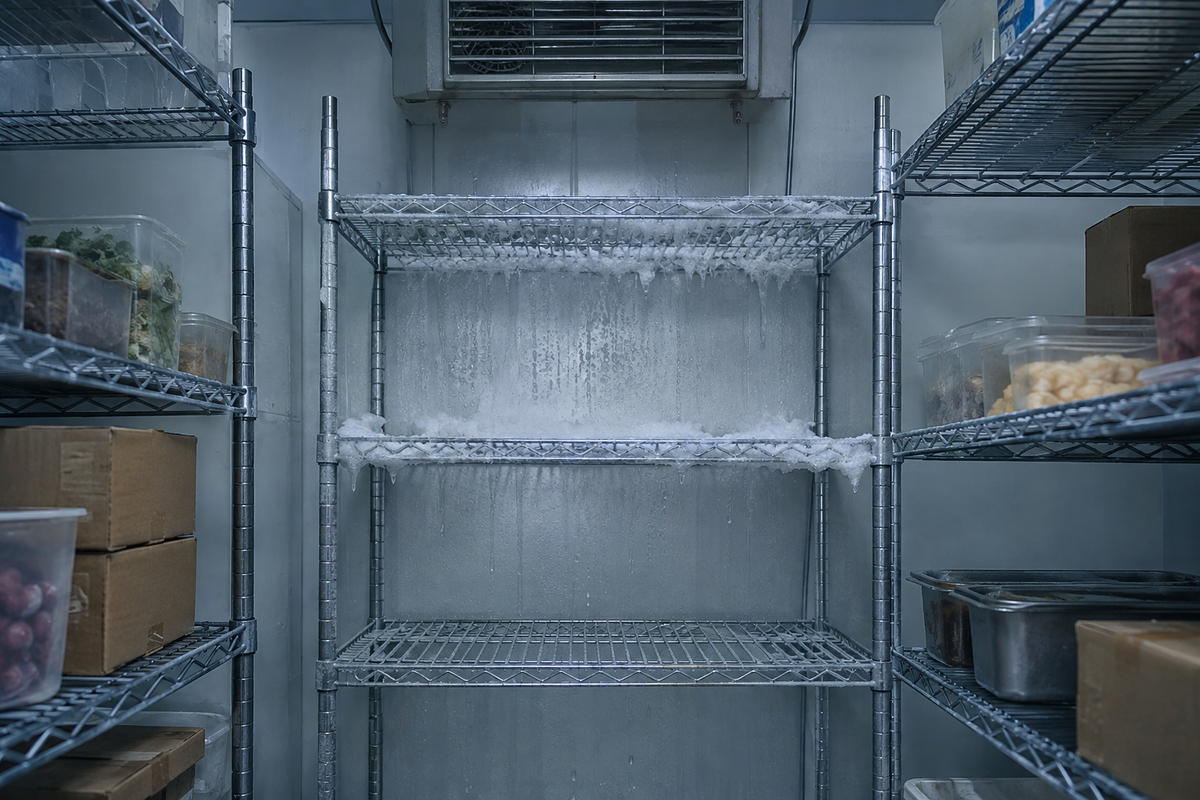
Blocked Vents from Overloading
Stacking product directly against the evaporator coil or discharge vent starves that one zone of airflow, even while the compressor works perfectly fine everywhere else. Leave a fist-width gap from vents and avoid floor-to-ceiling stacking against the back wall.
Walk-In Cooler-Specific Causes
Walk-ins fail differently than reach-ins. Floor and door seal integrity, one bad evaporator fan motor out of several, and frost buildup on a single coil bank are walk-in-specific issues. Don't treat a walk-in like an oversized reach-in; the failure points aren't the same.
Equipment Type Differences: Reach-In vs. Walk-In vs. Undercounter vs. Display Case
| Equipment Type | Most Common Failure Point | DIY-Checkable? | Typical Service Interval |
|---|---|---|---|
| Reach-in | Coil clogging from kitchen grease | Yes (coils, gasket) | Monthly coil check |
| Walk-in | Door/floor seal integrity, fan motors | Partially | Quarterly |
| Undercounter | Airflow clearance, compressor heat buildup | Yes (clearance, coils) | Quarterly |
| Display case | Door gasket wear, evaporator icing | Partially | Monthly |
What You Can Fix Yourself vs. What Requires a Licensed Technician
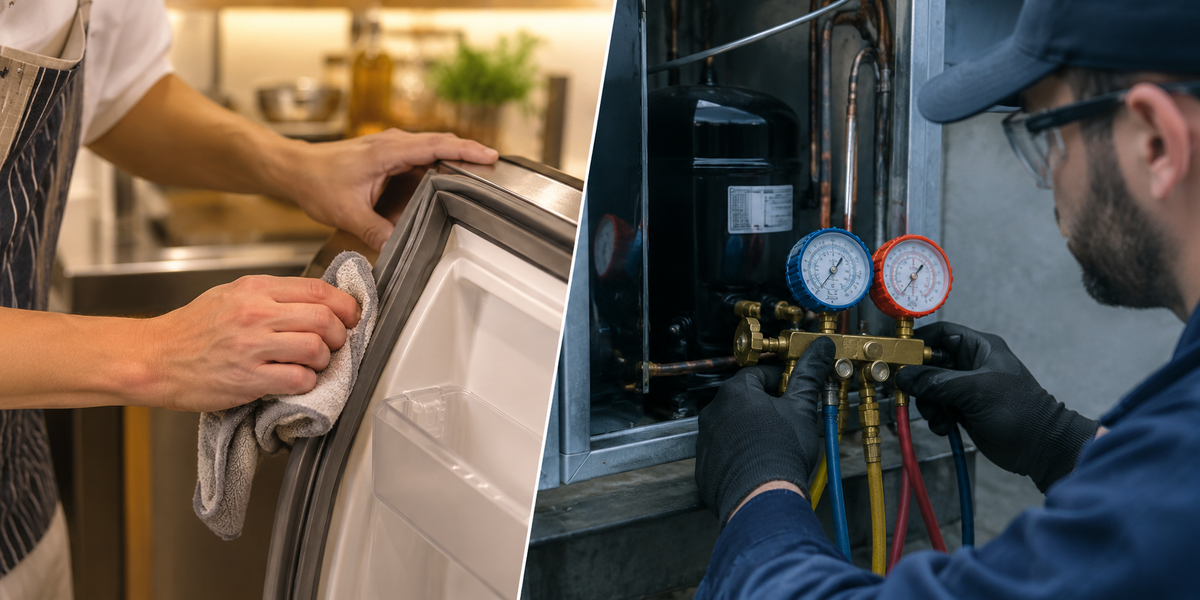
DIY-safe: cleaning coils, checking or replacing gaskets, clearing vents, verifying thermostat settings, power-cycling the control board, checking clearance and load.
Technician-required by law: anything touching the sealed refrigerant system, including compressor replacement, refrigerant recharge, and evaporator or condenser coil replacement. That line isn't a judgment call, it's set by EPA Section 608 certification requirements.
Repair or Replace? A Numbers-Based Decision Framework
A cracked gasket is an easy call. A compressor that's failed twice in eight months is a different conversation.
A commonly used rule of thumb: repair if the cost is under roughly half of what a comparable new unit would cost. Weigh that against the age of the unit (commercial refrigeration units are commonly expected to run 10 to 15 years), how often it's failed in the last 12 months, and whether your energy bill has been creeping up, since a struggling compressor draws more power to deliver less cooling. None of these alone tells the whole story. Together, they usually make the decision obvious.
Preventing Recurrence: A Realistic Maintenance Schedule
- Weekly: Check gaskets visually. Verify your thermometer reading against the unit's display.
- Monthly (or more often in greasy kitchens): Clean condenser coils.
- Quarterly: Check door alignment and hinges. Clear the condensate drain line.
- Annually: Have an EPA-certified technician inspect the refrigerant charge and electrical components. This is the step that catches a slow leak before it turns into the Pattern 2 drift described above.
First-Hand Scenario: Diagnosing a "Fine Most of the Day, Then Warm" Reach-In
A reach-in in a busy prep kitchen read 36°F most of the day, well within range. But every afternoon around 2 p.m., it spiked to 47°F for about 25 minutes, then dropped back down on its own. The compressor sounded fine. The coils were clean. Nothing looked visibly broken.
The clue was the timing: it happened at almost the same time, every single day, whether the kitchen was busy or slow. That ruled out door traffic and overloading. What was left was the defrost cycle, and sure enough, the defrost timer was stuck running longer than it should have, holding the unit in its warm-up phase well past when the compressor should have kicked back in. Once the timer was replaced, the daily spike disappeared. No compressor issue, no refrigerant leak, just a fifteen-dollar part running on the wrong schedule.
That's the value of diagnosing by pattern instead of guessing down a generic checklist. A predictable, scheduled spike points somewhere specific.